Blog
The Ultimate Guide to Tourmaline Gemstones

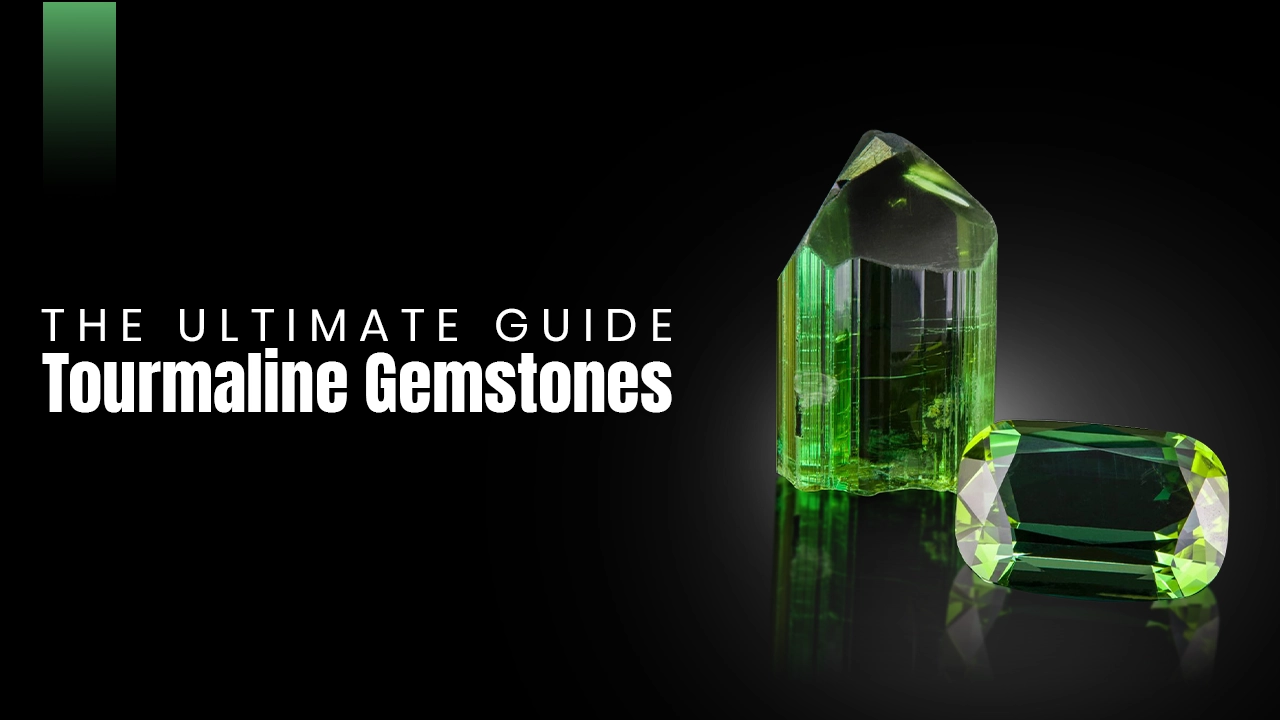
Tourmaline is the shape-shifter in the gem world. It turns up as neon blue that glows like city lights in the rain. Soft peach that feels like the last minutes of sunset. Dark forest green. Electric pink. Even slices that look exactly like tiny pieces of watermelon.
Designers love it because tourmaline gives them freedom. Collectors love it because the combinations of colour and origin are nearly endless. Buyers love it because you can find everything from fun, affordable stones to serious high-level pieces that sit beside ruby and emerald in a vault.
If you only know tourmaline as a random pink or green stone in a shop window, you are seeing a fraction of the story. This guide is here to open that up.
What Exactly Is Tourmaline As A Mineral Group
Tourmaline is not one mineral. It is a whole group.
All tourmalines share the same basic crystal framework, but different elements move in and out of that framework. Think of it like a house where the walls always stay the same, yet you can swap furniture and colours in every room.
At its core, tourmaline is a complex borosilicate with aluminium and other metals. Slots in the structure can be filled by iron, magnesium, lithium, sodium, calcium, manganese, copper and more. Those substitutions change the colour, sometimes dramatically.
The crystals belong to the trigonal system. In nature that gives long prismatic shapes with vertical striations. If you have ever seen a raw tourmaline crystal, you have probably noticed those long grooves running up the length of it. That is the structure showing on the surface.
Because of this structure, tourmaline is strongly pleochroic. Turn the crystal, and you see the colour shift in strength, sometimes even in hue. This is one reason cutters have to think very carefully about how they orient each stone. Rotate the rough a few degrees, and the face-up colour can change completely.
Which Tourmaline Varieties Are Used As Gemstones
Within the tourmaline family, a few members dominate jewellery use.
Elbaite
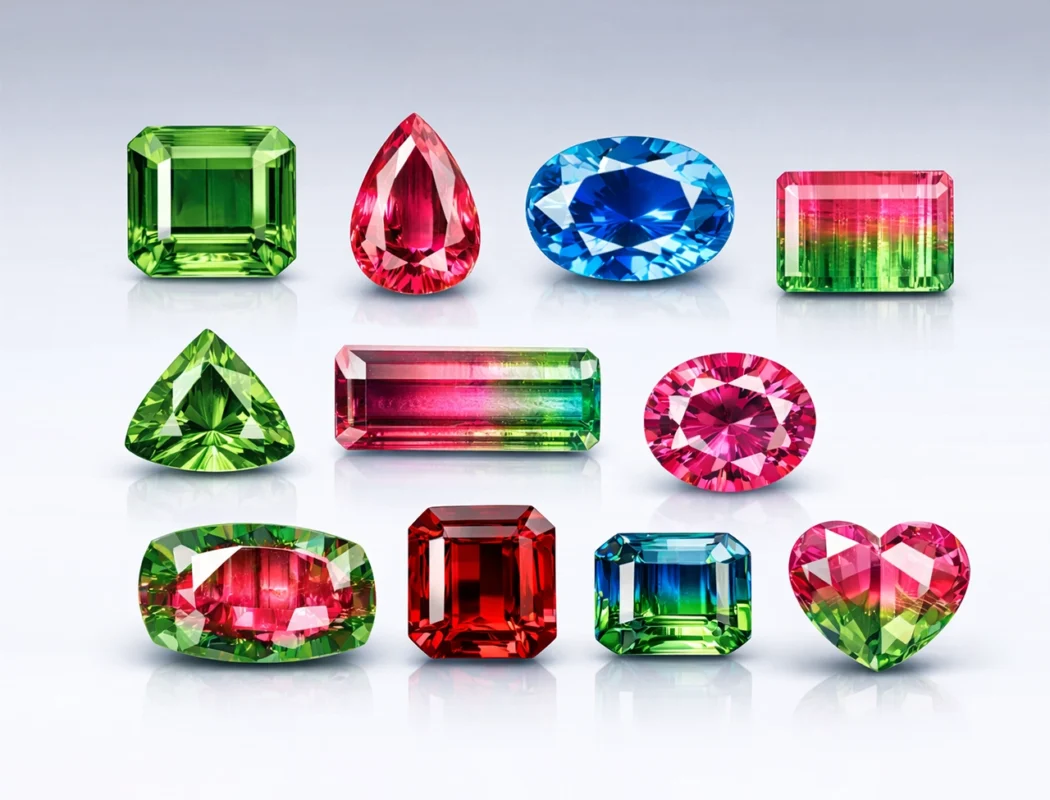
This is the main star. Almost all the bright greens, pinks, reds, blues and bicolours that you see in fine jewellery are elbaite. When people say gem tourmaline, this is usually what they mean.
Liddicoatite
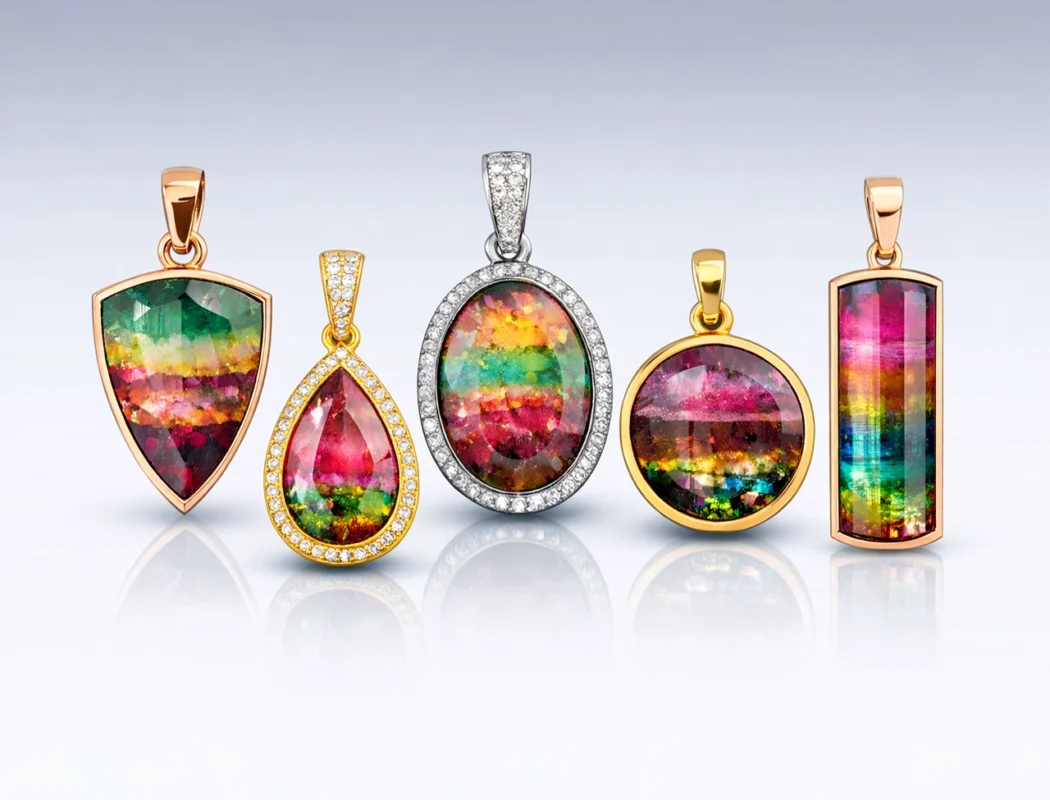
Closely related to elbaite. Famous for slices that show triangular or sector zoning, often with multiple colours in one cross-section. These slices are sometimes polished and used in pendants or statement pieces.
Dravite
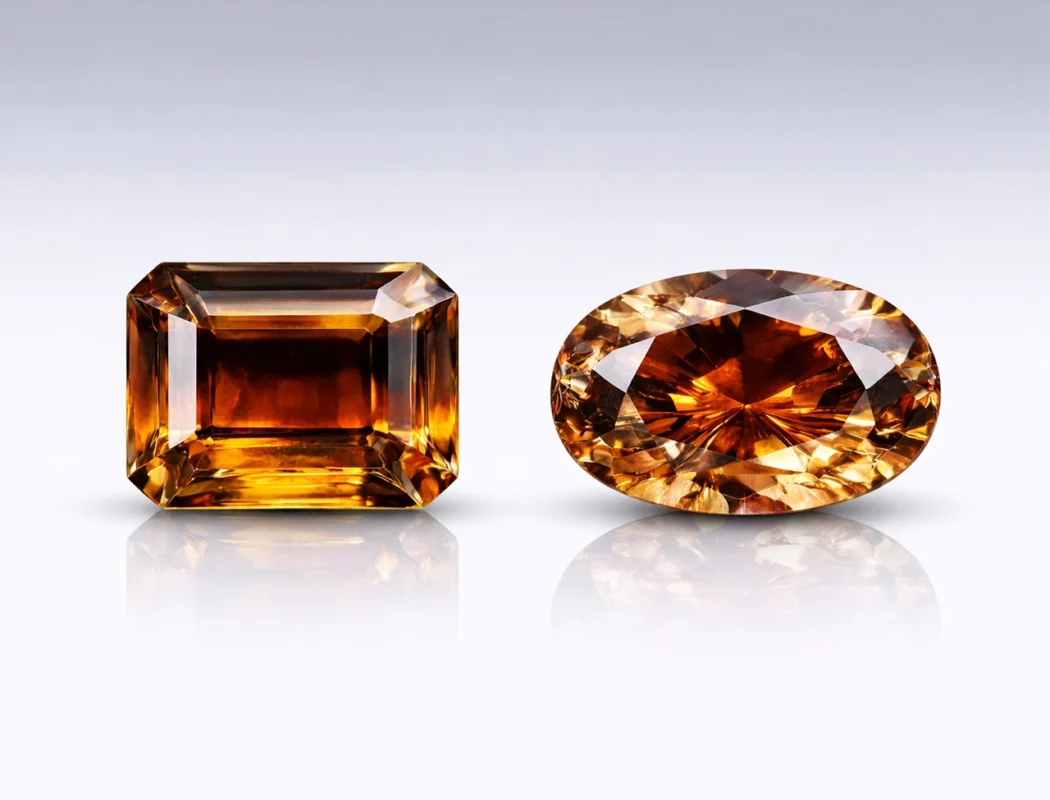
Typically brown to golden brown. Less common in high-end jewellery but can be attractive in warm tones.
Schorl
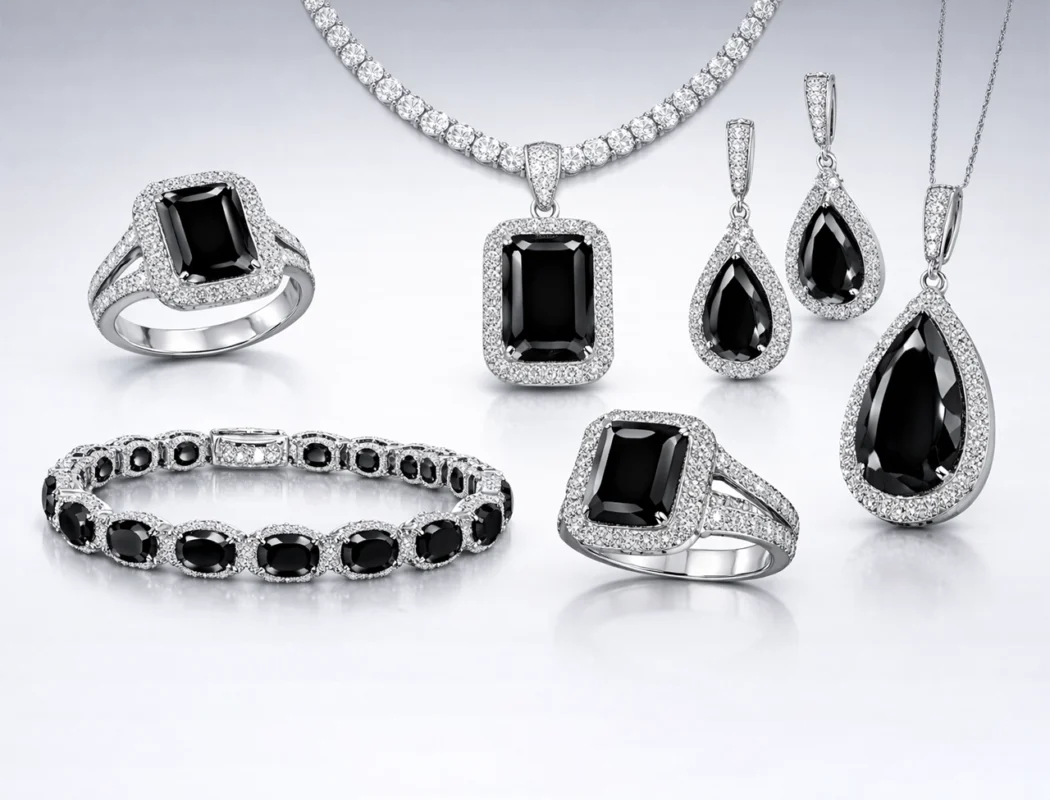
The classic black tourmaline. Rarely faceted as a transparent gem, but widely used as beads, carvings and rough for those who like bold black pieces.
There are other technical names inside the tourmaline group, but for a jewellery or buying guide, these are the ones you will meet most often.
What Are The Key Physical Properties Of Tourmaline
You do not need a lab course. Just a few basics help a lot.
Hardness
Tourmaline sits around seven to seven and a half on the Mohs scale. That is softer than sapphire, harder than quartz. In everyday terms, it is durable enough for most jewellery uses, especially pendants and earrings. In rings, it does well with a protective setting.
Toughness
Tourmaline is reasonably tough but still brittle. It can chip if struck hard on a corner. Long, thin stones especially need some protection around the ends.
Refractive index and lustre
Tourmaline has a refractive index high enough to give good brightness when it is well cut. The lustre is vitreous, meaning a clean glass-like shine. A good stone should look alive rather than dull or sleepy.
Pleochroism
This matters more than people think. Tourmaline can show one colour along its length and a different, sometimes darker shade when viewed across its width. A skilled cutter chooses the orientation that gives the most beautiful face-up impression, even if that means sacrificing some weight.
When you hold a tourmaline and rock it gently, you are seeing all these properties at work together.
Why Does Tourmaline Come In So Many Different Colours
Short answer. Chemistry plus structure.
The tourmaline framework has multiple positions where different metals can sit. Change which element occupies a position, and you change how the crystal absorbs and reflects light.
- Iron tends to push tourmaline towards green and blue.
- Manganese encourages pink and red tones.
- Copper, in rare cases, produces the electric blue and green associated with Paraiba-type material.
- Chromium and vanadium can create intense green in chrome tourmaline.
On top of this, you have zoning. While the crystal grows, conditions in the surrounding fluid change. Different elements are available at different times. The result is a crystal with bands or sectors of different colours. Cut across that crystal, and you may see rings, triangles or stripes of contrasting hues.
Tourmaline is like a diary of the pocket it grew in. Every colour shift inside the stone is a record of a change in its environment.
What Are The Main Colour Categories Of Tourmaline
In the trade, you will hear colour discussed as simple families first, and only later as special names.
Green tourmaline
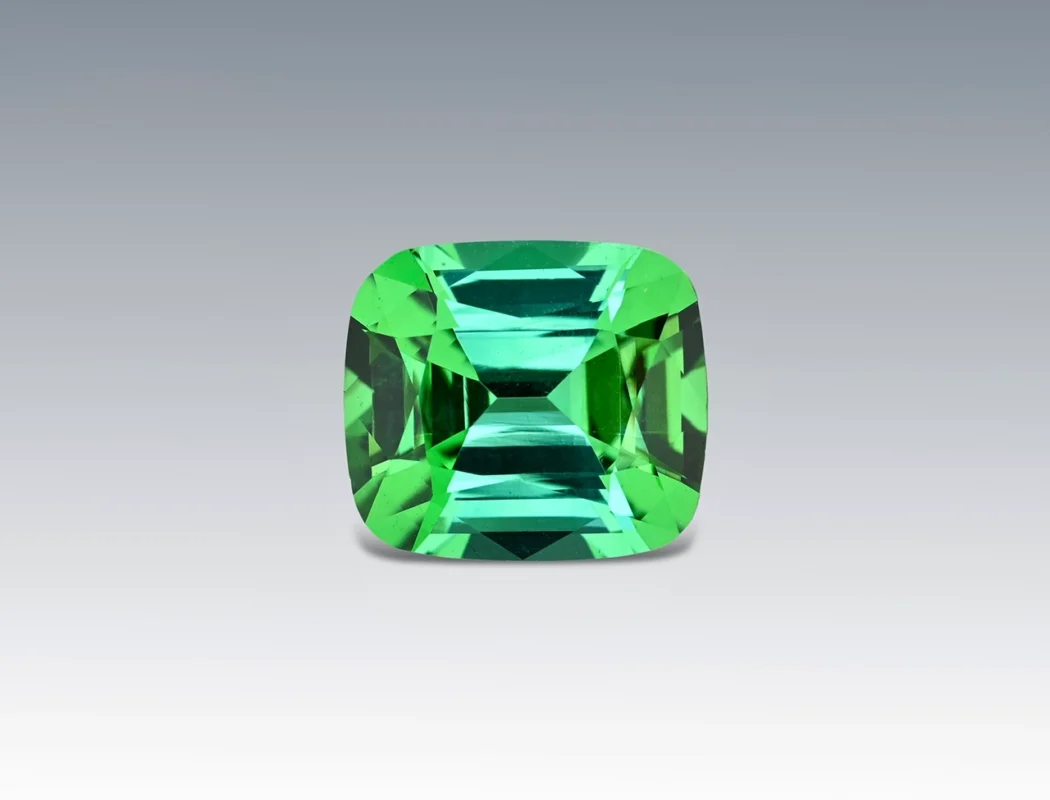
From fresh mint and grassy tones to deep bottle green. Some stones lean slightly blue, others slightly yellow. Clean, medium to medium dark greens with good brightness are widely used and can be very elegant.
Pink and red tourmaline
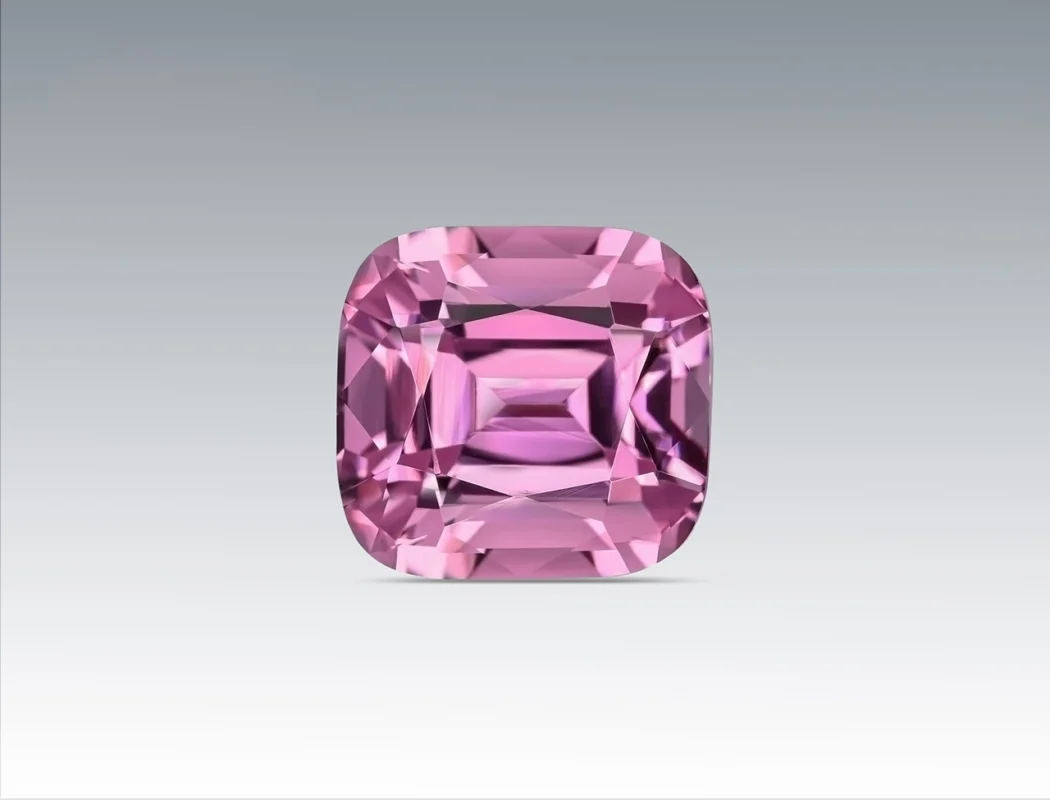
Gentle pastel pink, vivid fuchsia, deep raspberry. If the red is strong and holds up in different lighting, the stone may be sold as rubellite. Lighter and brighter pinks are hugely popular in modern designs.
Blue tourmaline
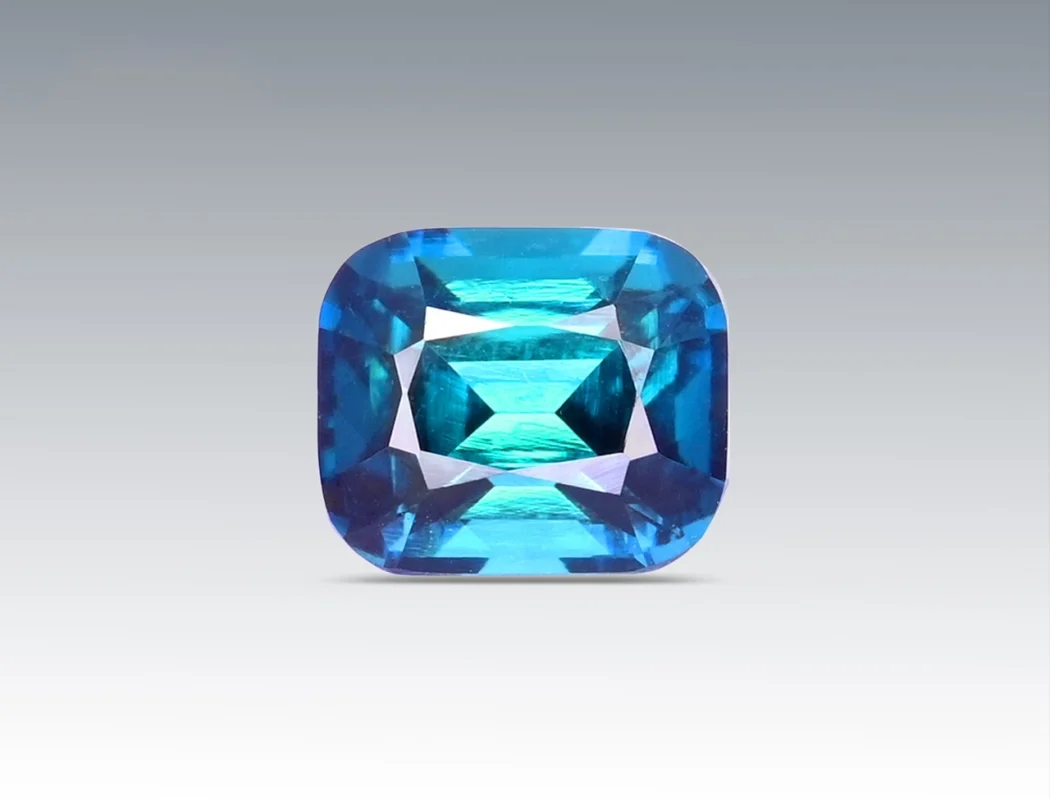
Pale teal, rich Caribbean-like blue-green, darker denim or ink blue. The more purely blue stones without strong green or grey undertones are called indicolite.
Yellow and orange tourmaline
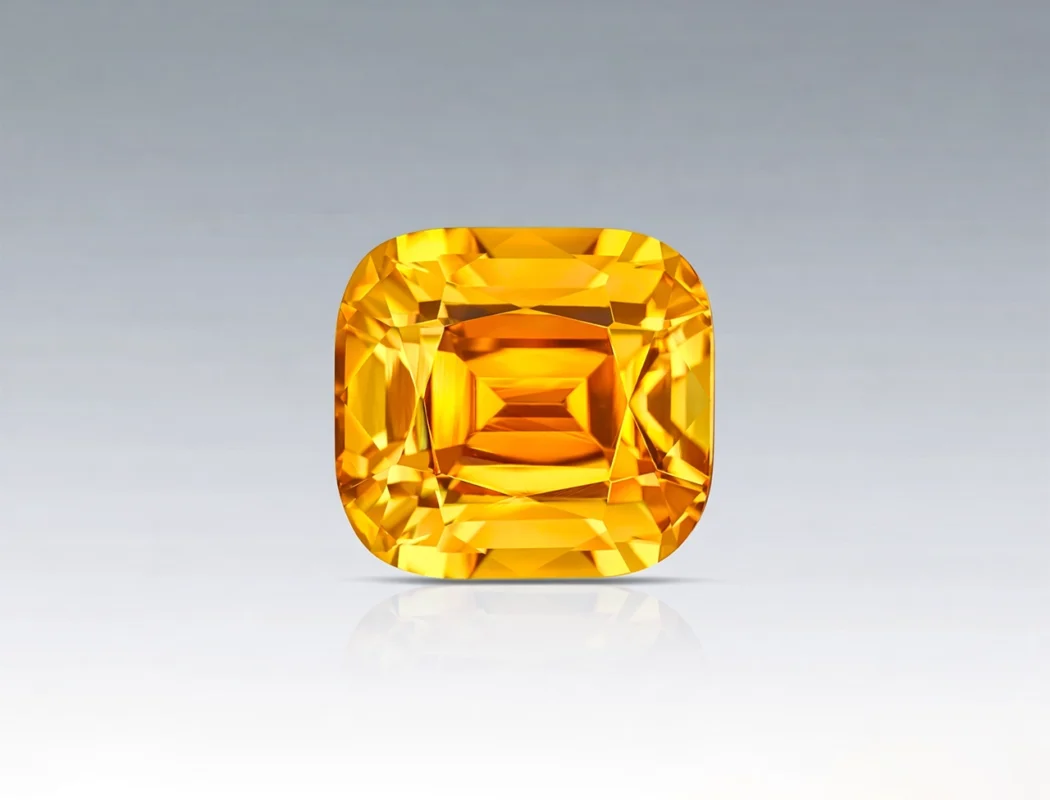
Less common but very attractive when clean. Colours range from soft lemon to honey, sometimes with a brownish touch.
Brown and champagne tourmaline
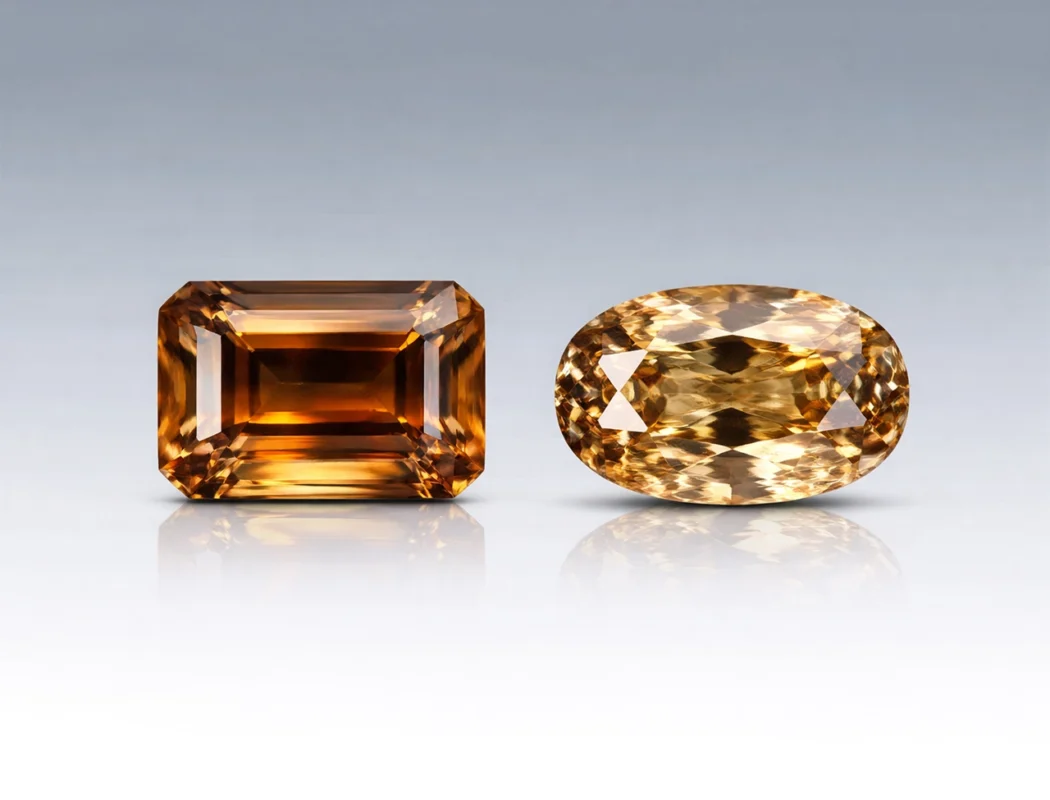
Warm earthy tones. Often more affordable, but they can be beautiful in rose gold or mixed metal designs.
Black tourmaline
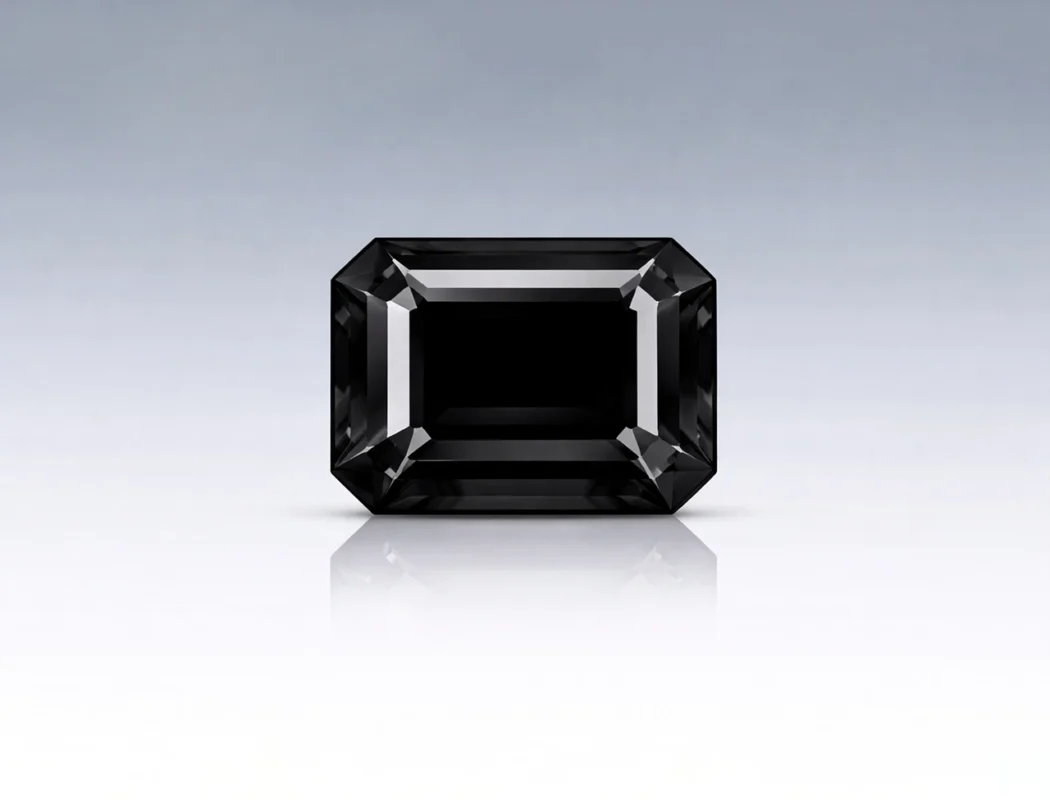
Schorl. Dense black. Used more for impact and contrast than for sparkle. Often cut as beads or simple shapes rather than fine faceting.
The magic of tourmaline is that a single mine can produce several of these colours within one field. Sometimes within one crystal.
How Do Bicolour And Multicolour Tourmalines Form
Those half and ringed stones are not tricks. They are geology.
As the tourmaline crystal grows, the composition of the fluid around it changes. Maybe iron is more abundant at the start, then manganese becomes more available, then the chemistry of the melt shifts again. The crystal keeps growing, but now incorporates a slightly different recipe.
If the change happens along the length, you get zones that run from one end of the crystal to the other. One half may be green, the other pink. Cut that crystal into a long stone, and you see a clear colour split.
If the change happens in layers from the centre outward, you get a core and rim effect. Pink in the middle, green around the outside, or the other way round. Slice across that crystal and the cross-section looks like a tiny piece of fruit.
Jewellers love these stones because they are instantly recognisable. No one mistakes a good watermelon slice for anything else. Designers can build entire collections around a few memorable pieces of multicoloured tourmaline.
What Do The Famous Tourmaline Trade Names Actually Mean
Now we step into the area where romance and precision try to live together. Trade names grew from specific places and qualities. Over time, they spread. It helps to know the original meaning, even if the market sometimes stretches the edges.
What Is Paraiba Tourmaline And Why Is It So Valuable
Paraiba tourmaline is the rock star of this family.
The original stones came from the Brazilian state of Paraiba in the late nineteen eighties. They showed an electric blue and green that almost did not look real. The cause was copper and manganese in particular combinations, plus the way the crystal absorbed light.
Those first crystals were small, rare, and quickly mined out. Later, similar copper-bearing tourmalines were found in Mozambique and Nigeria. The colour is sometimes indistinguishable to the eye, though gem labs can often separate origins.
Today, when people say Paraiba or Paraiba type, they usually mean copper-bearing tourmaline with that intense, almost neon blue or green. The best stones are genuinely scarce and priced accordingly.
When Does A Pink Or Red Tourmaline Qualify As Rubellite
Rubellite is meant to describe tourmaline in the red part of the spectrum. Not just pink, but a confident red or red purple that keeps its colour in many kinds of light.
In older usage, a stone had to look richly coloured in daylight, evening light, and indoor light to earn the name. If it turned dull or brownish except in bright sun, it did not qualify.
In modern trade, the line has blurred. Some merchants use rubellite for any strong pink red tourmaline. Others are stricter. For you as a buyer, the most important thing is not the word itself but the colour in front of you. Does it look truly red and lively on your own hand, in your own lighting
If it does, and the stone is clean and well cut, the label becomes less important than the effect.
What Makes A Blue Tourmaline Count As Indicolite
Indicolite refers to blue tourmaline. The name comes from indigo.
Stones sold as indicolite usually range from teal to pure blue. The finest examples show a clear, rich blue with only a hint of green. They are not so dark that they turn blackish in low light, and not so pale that the colour washes out.
Because many blue and blue-green stones are marketed as Paraiba type when they contain copper, you will see the word indicolite used mostly for non-copper-bearing blue tourmaline. These can be extremely beautiful, especially in emerald cuts where the long crystal structure is emphasised.
What Is Watermelon Tourmaline And How Is It Used In Jewelry
Watermelon tourmaline is the playful one.
A classic watermelon crystal has a pink or red core and a green rim when you look at the cross-section. Sometimes the colours are reversed, or there are extra bands, but the general effect is a fruit slice.
Cutters often slice these crystals perpendicular to their length. The result is thin discs that show the full ring pattern. These are polished and used as pendants, earrings or statement ring tops, usually in cabochon form rather than faceted.
Long bicolour crystals that run from pink to green along their length are also described as watermelon in a looser sense. These are cut as long rectangles or freeforms that show the gradient.
How Do Chrome And Other Green Tourmalines Differ From Standard Green Stones
Not all green tourmaline is created equal.
Chrome tourmaline contains chromium or vanadium, the same elements that colour emerald. The result is a vivid, bright green that can be almost glowing in daylight. Good chrome tourmaline feels saturated and lively without tipping into overly dark tones.
Standard green tourmaline, coloured mainly by iron, can also be beautiful but often has a more earthy or olive character. Both have their place. Chrome is the attention seeker. Fine regular green can be elegant and slightly calmer.
Other descriptive names appear in the trade from time to time, but these are the main ones you will meet consistently.
How Does Rough Tourmaline Become A Faceted Gemstone
Picture the starting point. A long crystal just pulled from a pocket in Brazil, Mozambique, or Afghanistan. It has vertical grooves, some natural cracks, patches of rough skin and zones of rich colour running through the length.
Turning that into a gem is a series of choices.
First, the cutter studies the crystal. They look for:
- The cleanest areas inside
- Cracks or stress lines that must be avoided
- The direction in which the colour looks best
- The natural shape of the crystal
They mark the rough with pen or ink, planning where to saw or break. Often, the crystal is split into a few promising pieces. Each piece is then shaped on a spinning wheel charged with abrasive powder. This stage creates a basic outline, such as an oval, emerald cut or cushion.
Next comes faceting. The stone is fixed on a dop stick, placed against the lap at precise angles, and each facet is ground in sequence. Facets are then polished on finer laps until they reflect cleanly. At each step, the cutter must balance beauty against weight. They can keep more carats by leaving the stone deep, or bring more light to the face of the gem by cutting away extra thickness.
A good tourmaline cut is all about honesty. It respects the shape of the crystal, makes the most of the colour, and avoids hiding problems behind overly deep pavilions or strange proportions.
What Are The Most Popular Cuts For Tourmaline
Because tourmaline crystals are naturally long, many stones follow that shape.
You will see a lot of:
- Emerald cuts and step cuts
Long rectangles with parallel facets that echo the crystal structure. Very elegant for greens, blues and bicolours. - Elongated cushions and ovals
Softer outline, but still using the length of the crystal. Good for rings and pendants. - Pear shapes
Especially in pink, red and blue stones. The pointed end can emphasise colour concentration. - Freeform and fantasy cuts
Used for bicolour and multicolour pieces where the cutter wants to follow the natural zoning rather than impose a standard shape.
Slices and tablets also appear, especially in watermelon and liddicoatite. These highlight internal patterns rather than brilliance.
In general, tourmaline tolerates creativity. As long as the cut is balanced and the stone does not become too shallow or too deep, designers can play with many outlines.
How Does Pleochroism Affect The Way Tourmaline Is Cut
Pleochroism is tourmaline’s habit of showing different colour intensities along different directions. One direction may look strongly coloured, another more washed out or shifted in hue.
Cutters use this to your advantage.
They rotate the rough under a neutral light and watch how the colour looks as they turn it. The ideal is to orient the stone so that the strongest, most beautiful colour faces up in the finished gem.
Sometimes this means sacrificing weight. If the best colour lies across the width rather than along the length, the cutter may decide to cut a shorter gem with better face-up colour rather than a long but weak-looking stone.
You can check this yourself. Look down the table of a faceted tourmaline, then tilt it to view along the length. If the stone is well oriented, the colour you see when looking straight down should be the most attractive version of the hue.
Which Quality Factors Matter Most When Grading Tourmaline
You can think about tourmaline in a similar way to other gemstones, with four main pillars plus one extra.
- Colour
- Clarity
- Cut
- Carat weight
- And for some stones, the origin
Colour is king. The richer, cleaner and more vivid the hue, the higher the potential value. A modest-sized stone with superb colour can be worth more than a much larger one that looks dull or brownish.
Clarity comes next. Tourmaline often has inclusions, especially in red and pink stones. For many colours, eye-clean stones that look free of marks to the naked eye are considered good. In a few varieties, some inclusions are acceptable if the colour is exceptional.
Cut controls how much life you see. A well-cut stone returns light cleanly and shows an even colour. A poorly cut stone can look sleepy even if the raw material was good.
Carat weight matters most at the top. Very fine stones above two or three carats in certain colours become rare fast. Price increases are not linear at that level.
Origin starts to matter as you move into higher prices, especially for copper-bearing and certain historic sources. For everyday buying, it is useful information but not the main driver.
What Does Top Colour Look Like In Different Tourmaline Types
Each colour family has its own sweet spot.
- Green
Strong, fresh green that is neither too dark nor too light. Minimal brown or grey undertone. The ideal feels like healthy leaves in indirect sunlight. - Pink and rubellite
For pink, clear, lively tones from pastel to vivid rose. For rubellite, rich red or red purple that holds its strength in all lighting, not just under bright sun. Dull or brownish stones are less desirable. - Blue and indicolite
Clear blue without heavy grey masks. Slight teal can be attractive if the stone is bright. Very dark stones that look almost black in low light are less valuable. - Paraiba type
Neon is the keyword. The colour should appear to glow from within, even at small sizes. Washed-out or murky copper-bearing stones do not reach the top tier. - Bicolour and watermelon
Here, the interest lies in contrast and layout. You want a clear separation between colours and a pleasing balance. Muddy or confused zoning is less attractive.
Once you have seen a few top examples in each category, your eye will never forget the standard.
What Level Of Clarity Should You Expect In Tourmaline
Expectations change with colour.
- Green and many blue stones
Eye clean is a common standard. Small inclusions under magnification are fine, but the stone should look clean to the naked eye. - Pink and rubellite
More tolerance. Fine silk or scattered inclusions are common and accepted, especially in deeper colours. Very obvious cracks or large dark inclusions across the centre are not. - Paraiba type
Slight inclusions are usually forgiven because the colour is the main event. Very heavily included stones, however, lose brilliance and should be priced accordingly. - Bicolour and watermelon
Some inclusions are almost part of the character. As long as the stone is structurally sound and still attractive, collectors focus more on the colour pattern.
When you inspect a stone, look straight down, then from the side. If inclusions draw your eye more than the colour does, that is a warning sign.
What Extra Factors Matter For Premium Types Like Paraiba And Rubellite
At the top level, small details make big differences.
For Paraiba type stones:
- Strength and purity of the neon effect
- Evenness of colour across the face of the gem
- Minimal dark patches or colourless areas
- Confirmation of copper content and sometimes origin from a trusted lab
For rubellite:
- True red or red purple tone that does not go too brown
- Stability of colour in different lighting environments
- A cut that gives brightness rather than a heavy, closed look
In both cases, documentation from a respected laboratory becomes more important as prices climb. It gives clarity on treatment and, in some cases, origin.
What Treatments Are Commonly Used On Tourmaline
Tourmaline is often more honest than some other gems, but treatments still exist.
The two main ones are:
- Heat treatment
Gentle heating can improve certain colours, lighten dark stones, or remove brownish tints. It is common for some varieties to be stable. - Irradiation
Used mainly to produce or intensify pink in paler stones. This can be done in combination with heat. Many irradiated stones are stable in normal conditions, but any treatment should be disclosed.
Oil or resin filling is much less common in tourmaline than in emerald, but surface-reaching cracks may occasionally be oiled to improve appearance. Again, this should be made clear when stones are sold.
How Are Tourmaline Treatments Detected Or Identified
The full answer lives in gem laboratories, but you can understand the outline.
Experts look at:
- Internal features under magnification
Certain inclusion patterns can suggest heating, while others point to natural growth. - Colour distribution
Sharp colour zoning or unusual patterns may hint at irradiation. - Spectroscopic tests
Instruments that analyse how the stone absorbs light can help detect copper presence in Paraiba-type stones and, in some cases, indicate treatment.
As a buyer, you do not have to perform these tests yourself. For higher value stones, especially Paraiba type and major rubellite, it is wise to request a report from a respected lab. That report will state whether they detected treatment and what it is.
Are There Synthetic Or Lab Created Tourmalines On The Market
Laboratory-created tourmaline exists, but it is not common in mainstream jewellery in the way synthetic ruby or sapphire are.
What you will see more often are imitations:
- Glass or plastic in bright colours sold as generic tourmaline
- Other gemstones with similar colours are mislabelled as tourmaline
- Doublets or composites where a thin slice of real tourmaline is bonded to another material
The best protection is to buy from reputable sellers and pay attention to price. High-quality tourmaline offered at extremely low prices without any explanation or documentation should make you cautious.
What Questions Should You Ask About Treatment When Buying Tourmaline
You do not need to interrogate every jeweller, but a few calm questions go a long way.
You can simply ask:
- Is this stone’s natural colour or has it been treated in any way
- If treated, do you know what type of treatment was used
- For a stone in this price range, do you recommend or provide a lab report
Ask these questions in a relaxed tone. You are not accusing anyone. You are just gathering information. The way someone answers often tells you as much as the words themselves.
Why Do Jewellery Designers Love Working With Tourmaline
Designers see tourmaline as a playground.
There are several reasons:
- Colour range
One gem family gives them soft pastels, intense neons, earthy tones and graphic bicolour effects. - Shape of rough
Long crystals are perfect for sleek, modern cuts and bold lines. - Availability
While rare top stones are expensive, there is still enough material in many colours that designers can experiment without fear. - Personality
Tourmaline feels contemporary. It is less bound by tradition than ruby or sapphire, so designers feel free to push into new styles.
For you, this means you will see tourmaline in both classic and very modern jewellery. It adapts easily to many aesthetics.
Which Types Of Tourmaline Work Best In Different Jewellery Pieces
Some colours and shapes naturally suit certain roles.
- Rings
Greens, blues and strong pinks in well-cut stones work beautifully in rings. Long emerald cuts make elegant central stones. For daily wear, medium sizes with protective settings are ideal. - Pendants
Bicolour and watermelon pieces shine as pendants, where you can enjoy the full pattern and length. Larger stones are easier to wear on the chest than on the hand. - Earrings
Matching pairs in pink, green or blue are popular. Lightweight cuts and slightly softer colours work well because they sit close to the face. - Bracelets
Multi-stone bracelets with mixed colours of tourmaline are a classic way to show the variety of the gem family.
Slices and unusual shapes that might be too fragile for rings often find a home in pendants and earrings, where they are safer from impact.
Is Tourmaline Durable Enough For Everyday Jewelry
In most cases, yes, with common sense.
With a hardness of around seven to seven and a half, tourmaline is harder than many stones people wear daily, such as opal or turquoise. It can handle normal knocks and contact with clothing.
However:
- Long, thin stones can be vulnerable at the ends
- Sharp corners benefit from protective prongs or bezel settings
- Very large stones in high rings need a little extra care
If you tend to be rough with your hands, choose settings that cover the corners and do not leave edges exposed. For pendants and earrings, durability is rarely a concern.
Which Metals Pair Best With Different Tourmaline Colours
Metal choice can change the mood of a stone completely.
- Yellow gold
Beautiful with green tourmaline, warm rubellite and golden tones. It adds richness and a classic feeling. - Rose gold
Very flattering for pink, peach and some rubellite stones. It creates a soft, romantic look. - White gold and platinum
Great partners for blue, teal and strong green tourmaline. They keep the overall look cool and modern.
Mixed metal designs are also effective when using multicoloured stones. For example, a watermelon tourmaline slice can sit in a setting that combines white and rose metal, echoing both the green and pink in the stone.
What Should You Decide Before Shopping For Tourmaline
If you start with only one idea in your head
Tourmaline
Beautiful
That is how you walk out confused and possibly broke.
Before you look at a single stone, answer four quiet questions for yourself.
What is my real priority
- Colour
You want the best possible shade in a smaller size. - Size
You want presence on the hand or neck, even if the colour is more modest. - Budget
You know the absolute ceiling, and you will not cross it for anything. - Origin or type
You specifically want Paraiba type, rubellite, watermelon or a certain country.
You can care about more than one of these, but choose which one wins when they fight.
How will this stone be worn
- Daily ring
- Occasional ring
- Pendant
- Earrings
- Loose gem for a collection
Your answer changes what level of durability and what type of setting you should look for.
Who is this stone really for
- For yourself now
- For a partner
- For a client
- For a future resale
There is a difference between the tourmaline your heart wants and the tourmaline your future buyer might want. Both can be valid. Just know which game you are playing.
How Can You Safely Buy Tourmaline Online
Online buying is convenient and dangerous at the same time. You cannot feel the stone, but you can still protect yourself.
Ask for more than one photo
At least front, side, and back. If every image is cropped tight around the face and never shows the full outline, that is a small flag.
Ask about the video
A short video under neutral light can reveal how the stone handles movement, brilliance, and pleochroism in a way static photos cannot.
Ask clear, written questions
You can keep it simple.
- Is this stone’s natural colour
- Has it been heated or irradiated
- Are there any significant inclusions that reach the surface
- Is there any obvious windowing or dead area in the centre
The tone can stay friendly. You are just asking for facts.
Check return policies
A genuine seller who believes in their stones usually offers a clear return period. It does not mean you will use it, but it shows confidence.
Pay attention to how they answer
Fast, honest, specific answers are a good sign. Vague, defensive or dismissive answers are not.
What Is The Safest Way To Clean Tourmaline At Home
Tourmaline does not need complicated spa treatments. It just needs gentle, regular care.
Use lukewarm water and mild soap
Fill a small bowl with clean lukewarm water. Add a tiny amount of gentle soap. Place the jewellery in and let it soak for a few minutes.
Soft brush only
Use a soft brush, such as a clean makeup brush or a very soft toothbrush, to loosen dirt behind the stone and around prongs. Work slowly. Do not press hard.
Rinse and dry carefully
Rinse in fresh water. Pat dry with a lint-free cloth. Let it air dry fully before storing.
Avoid harsh chemicals, strong cleaners, steam machines and sudden temperature shocks. They are not worth the risk.
How Should You Store Tourmaline To Avoid Damage
Tiny habits make a big difference.
- Keep tourmaline separate from harder stones such as sapphire and diamond. Those can scratch it.
- Use soft pouches or individual compartments so stones do not rub against each other.
- Do not throw jewellery in a random bowl near the sink or on a desk where keys and coins live.
For loose stones, small paper or plastic gem envelopes with labels work well. Just make sure they are stored flat so the stones do not slide into sharp corners.
What Should You Know About Repairs And Resizing With Tourmaline Jewelry
Repairs are where many stones get hurt.
If a ring needs resizing or rebuilding, the jeweller may have to apply heat very close to the stone. Tourmaline can react badly to rapid heating and cooling.
Ask in advance.
- Can the stone remain in the setting during this work
- Do you plan to remove it first
- Have you worked with tourmaline before
Sometimes the safest route is to remove the stone, do the metal work, then reset it. It costs a little more but can prevent a crack that would be heartbreaking and permanent.
How Has Tourmaline Been Viewed In History And Legend
Tourmaline has picked up stories from many cultures.
Some traditions say tourmaline traveled along a rainbow on its way to earth and collected all its colours. Others saw it as a stone that could help reveal truth and protect against negative thoughts.
In past centuries, red tourmaline was sometimes mistaken for ruby, and green tourmaline for emerald. Only with better science did people realise they were all part of a different family.
These legends do not change the physics, but they show something important. People have felt drawn to this gem long before modern marketing arrived.
What Modern Meanings Are Linked To Different Tourmaline Colours
In modern crystal culture, each colour of tourmaline has its own suggested mood.
- Pink and rubellite
Linked with love, emotional healing and gentleness. - Green
Associated with growth, prosperity and balance. - Blue and teal
Linked with calm communication and clear thinking. - Black
Often used as a grounding or protective stone.
You do not have to believe in any energetic properties to enjoy tourmaline. But many people like the idea that the colour they choose resonates with a particular feeling.
How Is Tourmaline Connected To Birthstones And Zodiac Signs
Tourmaline is recognised as one of the modern birthstones for October, along with opal. That means it often appears in birthstone jewellery for people born in that month.
In zodiac-themed jewellery, tourmaline is sometimes linked to Libra and Scorpio, although this varies with different systems and authors.
Again, these links are more about symbolism than science. They give people another excuse to pick a stone they already find beautiful.
What Makes Certain Tourmaline Stones Truly Collectible
Not every pretty stone is collectable. Collectors look for a few extra elements.
- Rarity in colour or type
True top Paraiba type stones, exceptional rubellite, pure indicolite blues. - Distinctive character
Bicolour or watermelon pieces with striking patterns that are clearly one of a kind. - Size combined with quality
Larger stones that still have excellent colour and clarity are much rarer than small ones. - Documentation
Clear origin when it matters, such as Brazilian Paraiba, and reliable lab reports for high-value stones.
A collectable tourmaline is not just attractive now. It is the kind of stone future collectors will still be talking about.
Which Types Of Tourmaline Are Most Sought After Today
Broadly speaking, the strongest demand focuses on:
- Copper-bearing Paraiba type in intense neon colours
- Fine rubellite with rich, stable red
- Pure blue indicolite without heavy grey
- Striking watermelon and multicoloured slices with clean patterns
- Chrome tourmaline with vivid, emerald-like green
Good stones in more accessible colours, such as standard green and pink, also enjoy steady interest, especially when cut well.
What Should You Consider If You View Tourmaline As A Long-Term Asset
If you are thinking beyond simple enjoyment, keep three things in mind.
Buy quality, not just carat weight
One superb stone will usually hold attention and value better than several mediocre ones.
Document everything
Keep lab reports, invoices and any notes about the origin. This paperwork will matter if you ever sell or pass the stones on.
Accept that markets move
Tastes change. New deposits appear. Old ones dry up. Paraiba type stones may always be in demand, but the finer details of fashion will move. Choose pieces that look beautiful to you, not only to an imagined future buyer.
Investment can be one layer of the story, but it should not be the only one.
FAQ
Is tourmaline a good choice for an everyday ring
Yes, if it is reasonably protected and you are not abusive with your hands. Choose solid settings and avoid very thin, exposed points for everyday wear.
What is the difference between pink tourmaline and rubellite
All rubellite is tourmaline, but not all pink tourmaline is rubellite. Rubellite is the deeper red to red purple material that holds strong colour in many kinds of light.
Can tourmaline fade or change colour?
Most natural stones are stable in normal use. Long-term intense sunlight or harsh conditions are never a good idea for any gem. Store and wear tourmaline with the same common sense you would use for other fine jewellery.
Do I always need a lab report?
For fun, modestly priced stones, a report is not essential. For expensive Paraiba-type, major rubellite or stones sold with specific origin claims, a report from a respected lab is very helpful.
Why do some tourmalines look dull even when the colour is strong
Often it is the cut. Stones that are too deep or too shallow can leak light and look sleepy. Inclusions and poor polish can also kill life. Strong rough does not guarantee a strong gem.
Are all bright tourmalines expensive
No. There are very lively stones in more common colours at friendly prices. The biggest jumps in cost usually appear when rarity, size and beauty meet in the same stone.
Tourmaline is a generous gemstone. It offers you serious collector pieces and playful slices, soft pastels and neon fireworks, quiet greens and loud pinks.
Now you know how it grows, how it is cut, how it is judged and how to live with it.
The only thing left is the enjoyable part.
Choosing the stone that feels like it was always meant to sit on your hand, your neck or your desk.